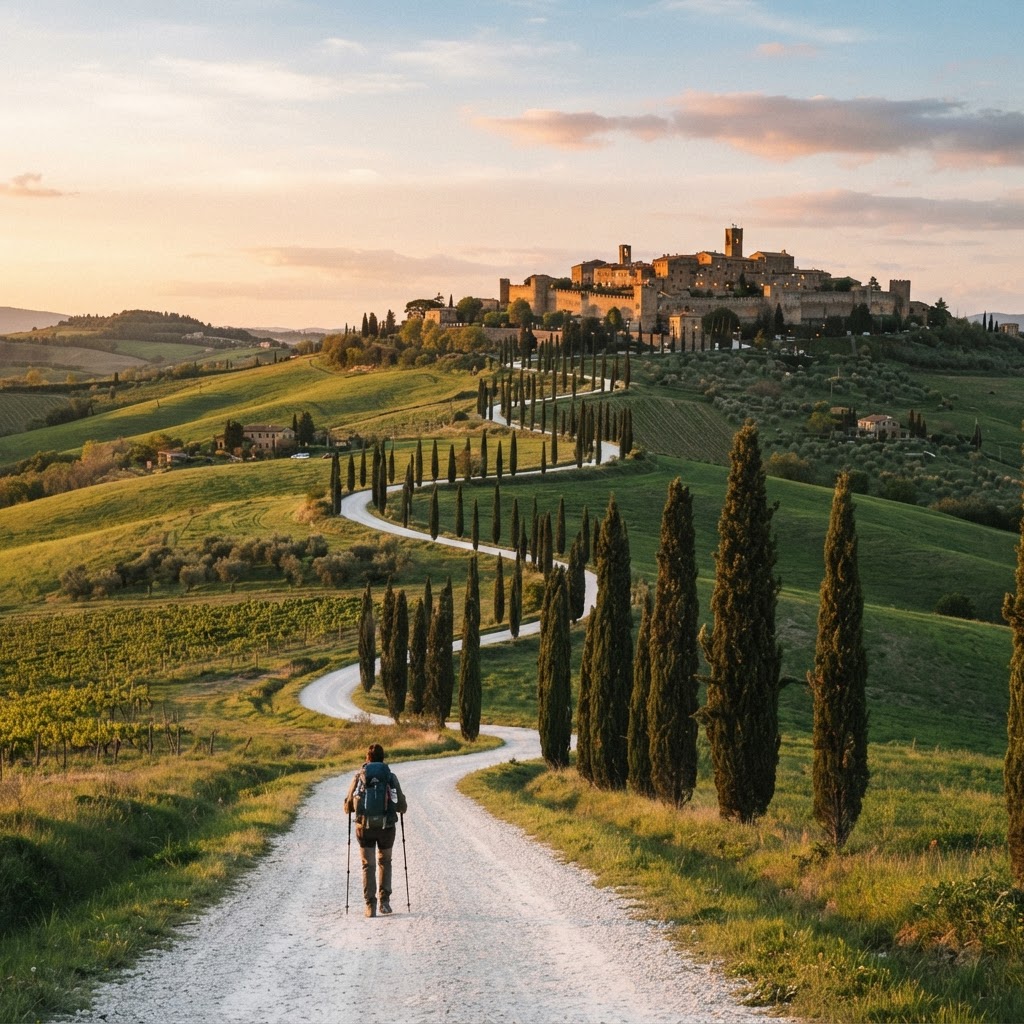
Via Francigena Accommodation Guide — Hostels, B&Bs & Hotels
Unlike the Spanish Camino, where municipal albergues line the route, the Via Francigena's accommodation is thinner, more varied, and often requires booking ahead. Here is what to expect across the four countries and how to plan your nights.
Types of accommodation
- Pilgrim hostels (ostelli, gîtes): dorm-style, €20–35/night. Some are run by associations or municipalities and priced for pilgrims; others are youth hostels.
- Convents and monasteries: a Via Francigena specialty — simple rooms, often pilgrim-priced, sometimes by donation. Book ahead; many close by 22:00.
- B&Bs and chambres d'hôtes: €50–90/night, private rooms, breakfast included. The backbone of the route in France and Italy.
- Agriturismi: Italian farm-stays, €45–80 — often the best value and the best food on the route, especially in Tuscany and Lazio.
- Hotels: €70–150+ in towns and cities; needed for Rome and for occasional rest days.
Country-by-country
England: B&Bs (£70–110) dominate; the section is short (2–3 nights).
France: gîtes d'étape and chambres d'hôtes are the norm — €35–70. Many are family-run and book ahead in summer. The network is good but spaced out, so plan stages to the available beds.
Switzerland: hostels (youth hostels, €40–60) and hotels. Switzerland is expensive — expect to pay more for less. Book the Alpine stages (Martigny, Bourg-Saint-Pierre) well ahead.
Italy: the richest and cheapest network — pilgrim hostels, convents, B&Bs and agriturismi from €20 in hostels up to €80 in private rooms. Popular Tuscan towns (Lucca, San Gimignano, Siena) fill up in summer; book 1–2 days ahead.
Booking — the key difference from the Camino
Most Via Francigena hostels require advance booking (unlike Spanish albergues, which are first-come, first-served). The practical pattern:
- Book 1–2 days ahead, by phone or email, especially from June to September.
- Book several days ahead for Lucca, Siena, San Gimignano, Viterbo and Rome in July–August.
- Carry the phone numbers of your next 2–3 stages — receptionists often call ahead for you.
Dorm etiquette
Lights out is usually 22:00. Pack your bag the night before (the 5 AM plastic-bag rustle is the most hated dorm sound), use a red-light headlamp for early starts, and leave the bed made. Many hosts are volunteers or families — treat the place as a home, not a hotel.
What to carry
Earplugs and a sleep mask are essential. A lightweight sleeping-bag liner (silk or cotton) is required in some hostels and far lighter than a full bag in summer. A small towel is useful — many hostels don't provide one.
Use the planner to lay out your stages against available overnight towns, then book the popular ones before you walk.
Explore the Via Francigena
Via Francigena
Plan your Via Francigena
Where to sleep on the Via Francigena: pilgrim hostels, convents, B&Bs and agriturismi — booking, dorm etiquette, pricing and country-by-country differences.