When to Walk the Via Francigena: A Season-by-Season Guide
Because the Via Francigena crosses four countries and 2,000 km, there is no single best time — the right season depends on which part you walk. The Alps near the Great St Bernard Pass can be snowed in until June, while the Italian plains south of Pavia are sweltering by July. Here is how to choose.
Spring (April–June)
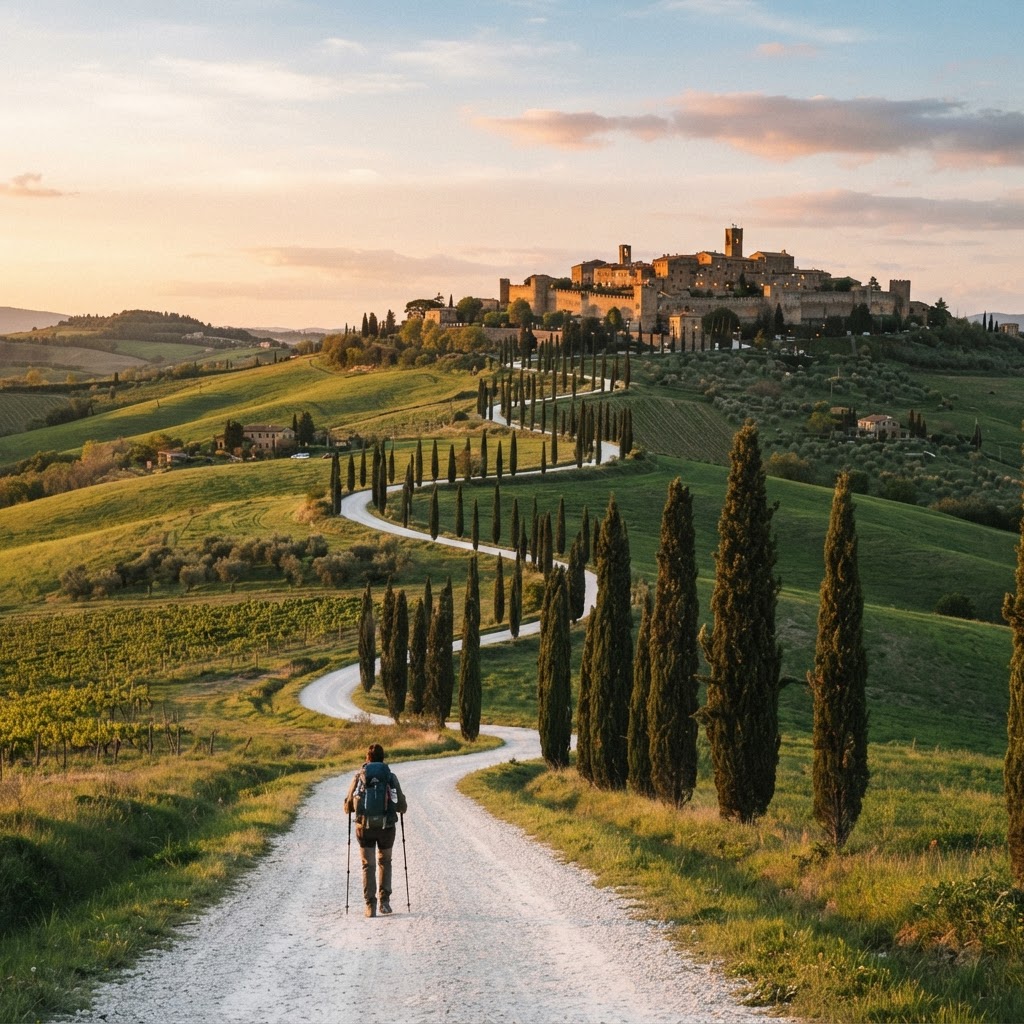
The best overall season for most of the route. England and France are green and mild, the Alps open up by late May, and Tuscany is carpeted in wildflowers before the summer heat. May and June are the most popular months. Watch for occasional rain in northern France and snow lingering on the high pass in early spring.
Summer (July–August)
The busiest season, but the hardest. The Po Valley and central Italy regularly hit 35°C+, and shade is scarce on the long agricultural stages. If you walk in summer, start at dawn, carry extra water, and plan shorter days. The Alps are at their best in July, but the Italian sections are punishing. Many Italians holiday in August, so accommodation in coastal towns like Massa and Lucca books up early.
Autumn (September–October)
A superb choice for Italy. Temperatures drop back to the low 20s, the Tuscan harvest is underway, and the light is golden. The Alps can see early snow by October. September is arguably the single best month for the Italian leg. In France, autumn is mild and the vineyards of Champagne and Burgundy turn red.
Winter (November–March)
Not recommended for the full route. The Great St Bernard Pass closes to walkers (typically November–May), and days are short across northern Europe. The Italian leg from Lucca to Rome is walkable year-round and can be a quiet, beautiful winter escape — pack for cold nights but mild days.
Matching the season to your section
- Canterbury → Alps: May–September
- Alps (Great St Bernard): late June–September only — check pass status before you go
- Aosta → Pavia: April–June or September–October (avoid midsummer heat)
- Tuscany → Rome: April–June or September–October
Practical tips
The route's weather tool shows a 35-day forecast for every town along the way — use it as your trip approaches. Whatever season you choose, pack layers: the Via Francigena goes from sea level to 2,469 m, and you may see four seasons in a single week.
Explore the Via Francigena
Via Francigena
Plan your Via Francigena
A season-by-season guide to walking the Via Francigena across four countries — the Alps, Tuscan heat, spring wildflowers, and the best months for each section.