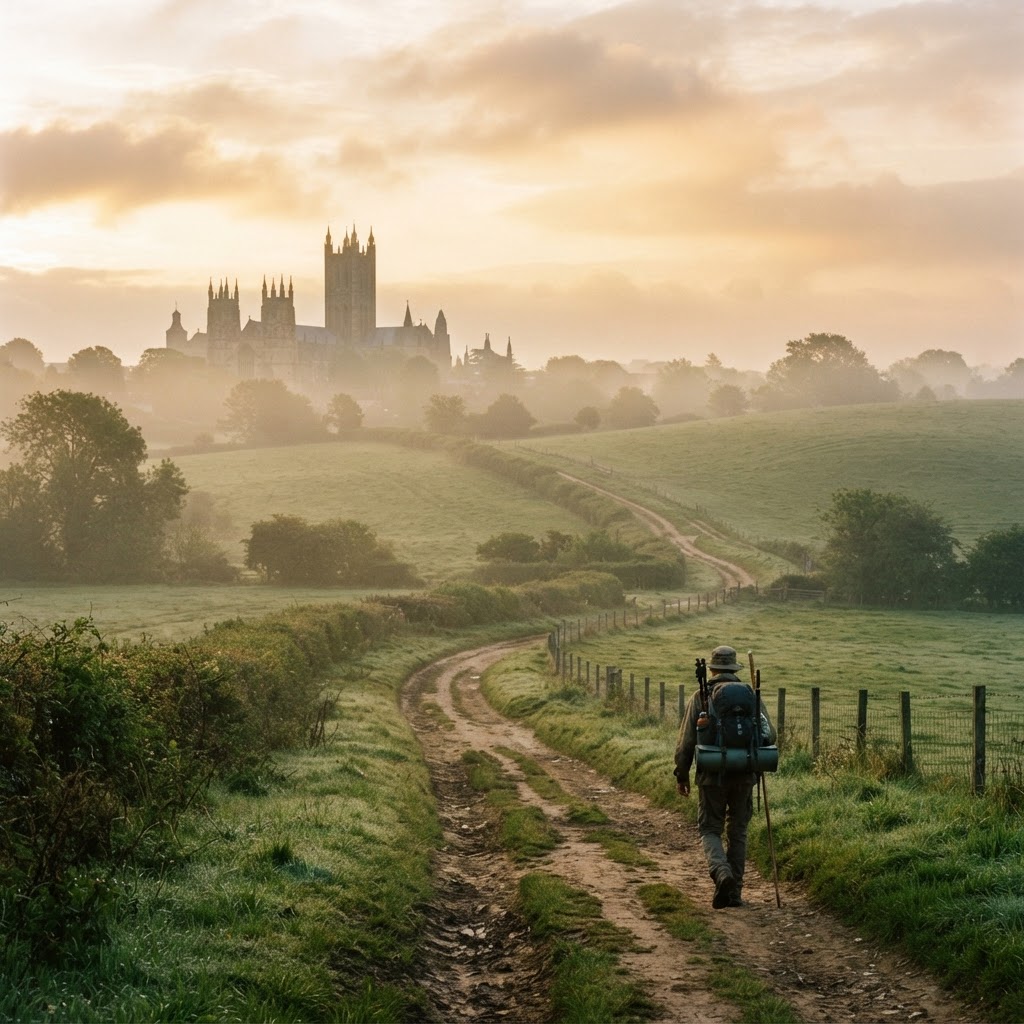
The Via Francigena: The Complete Guide to Walking from Canterbury to Rome
The Via Francigena is one of Europe's oldest long-distance pilgrimage routes — a 2,000 km journey from Canterbury Cathedral in England to St Peter's Basilica in Rome. First documented in the 10th century when Archbishop Sigeric of Canterbury recorded his return journey from Rome, the route crosses four countries — England, France, Switzerland, and Italy — and four very different landscapes, from the chalk cliffs of Kent to the Alps and the rolling hills of Tuscany.
Unlike the Camino de Santiago, the Via Francigena is quieter, greener, and far less developed. You will walk through medieval towns, vineyards, alpine passes, and Etruscan countryside, often on dirt tracks and ancient Roman roads. The infrastructure is growing but still modest: expect agriturismi, monasteries, B&Bs, and small hotels rather than a dense network of pilgrim hostels.
The route at a glance
- Total distance: ~2,000 km (1,250 miles)
- Countries: England → France → Switzerland → Italy
- Typical duration: 75–90 days end to end
- Start: Canterbury, England
- Finish: St Peter's Square, Rome
- Best for: experienced walkers, history lovers, and pilgrims seeking solitude
Major regions
The route naturally divides into four legs. England is a short, gentle two-day walk from Canterbury to Dover. France is the longest stretch — nearly half the route — crossing Picardy, Champagne, the Jura, and the Alps. Switzerland is a short but stunning passage along lakes and over the Great St Bernard Pass. Italy is the cultural heart, descending through the Aosta Valley, across the Po Valley, and into Tuscany and Lazio toward Rome.
Planning your walk
Most pilgrims do not walk the full route in one go. The most popular sections are the final 1,000 km from Vercelli (qualifies you for the Testimonium) and the last stretch through Tuscany. Use the Via Francigena planner to choose your start and end points, set a daily distance, and generate stage-by-stage accommodation.
Credentials and the Testimonium
Carry a Via Francigena pilgrim passport (credenziale), available from the Confraternity of Pilgrims or local churches. Stamp it at churches and accommodation along the way. To earn the Testimonium — the certificate of arrival issued in Rome — you must walk at least the final 100 km (from Acquapendente or closer). Collect it from the Opera Romana Pellegrinaggi office near St Peter's.
Is it for you?
The Via Francigena is quieter and less waymarked than the Camino, with longer stretches between services. It rewards self-sufficient walkers who enjoy route-finding and the rhythm of a long walk. If that sounds like you, Canterbury is waiting.
Explore the route
Via Francigena
Plan your Via Francigena
A complete guide to the Via Francigena: the 2,000 km pilgrimage from Canterbury to Rome through England, France, Switzerland, and Italy — route, regions, planning, and the Testimonium.