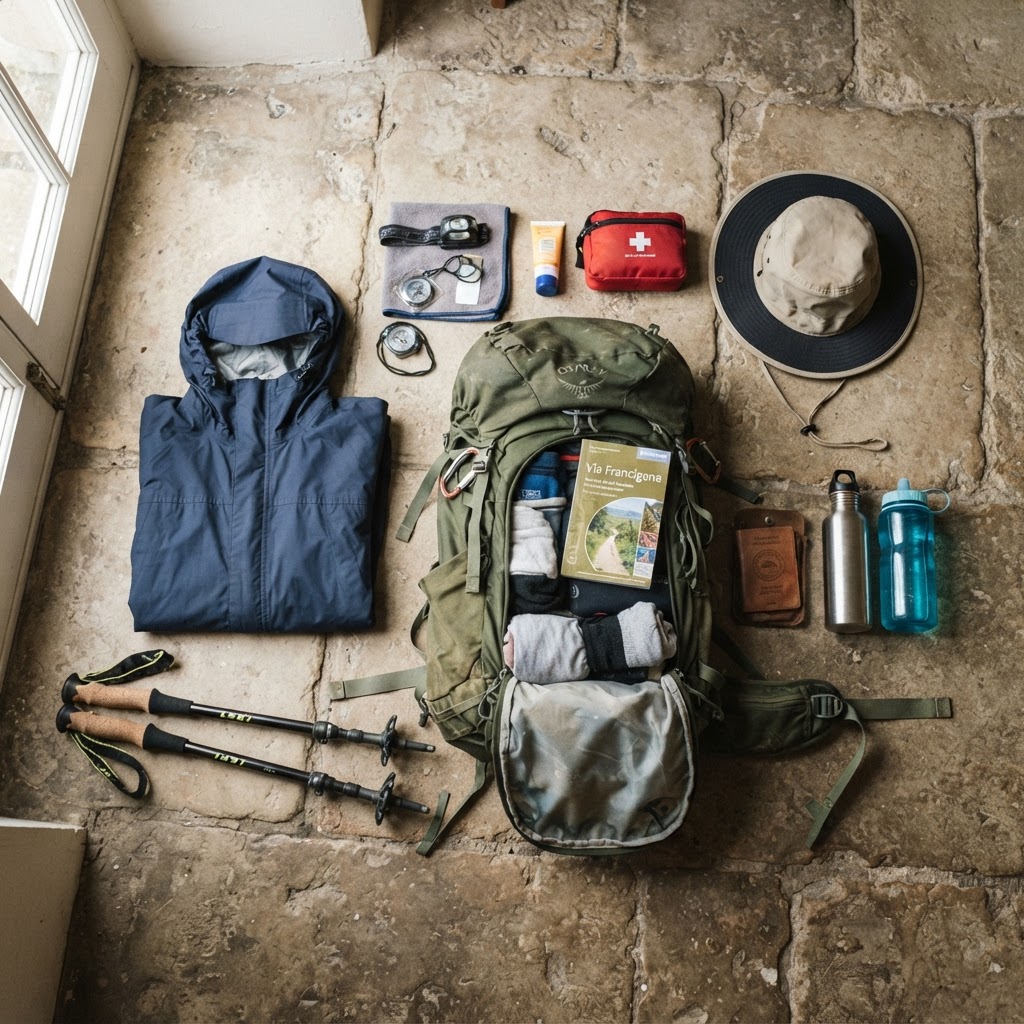
Via Francigena Food Guide — What & Where to Eat
The Via Francigena is a 2,000 km tasting menu across four of the world's great food cultures. Eating well is part of the pilgrimage — and unlike a packaged tour, you eat where the locals eat, in every region you cross.
The food by country
England (Canterbury–Dover): pub classics — fish and chips, ploughman's, a pint of local ale. Short but hearty.
France (Calais–Jura): the longest food stretch. Champagne in Reims, Brie and goat cheese in the north, the rustic cuisine of Picardy and Champagne-Ardenne, Burgundy's coq au vin as you near Langres, and the mountain cheeses of the Jura (Comté, Morbier). Bakery breakfast (coffee + croissant, €4–6) and a lunchtime menu (€12–16) are the rhythm.
Switzerland: fondue and raclette near Martigny, lake fish from Lake Geneva, and Swiss chocolate. Expensive — shop at Migros or Coop and self-cater where you can.
Italy (Aosta–Rome): the food highlight of the route.
- Aosta Valley: fontina cheese, polenta, carbonade (beef stew).
- Po Valley: risotto alla milanese near Vercelli (the rice capital), the agnolotti and mostarda of Piacenza, Parma's prosciutto and Parmigiano-Reggiano.
- Tuscany: ribollita (bread and bean soup), pappardelle al cinghiale (wild boar), bistecca alla fiorentina in Siena, pecorino and pici around Pienza and Radicofani.
- Lazio: gnocchi alla romana, carbonara and cacio e pepe as you near Rome, porchetta in the hill towns, and the white wines of Est! Est!! Est!!! near Montefiascone.
The daily food budget
- Frugal (self-catered): €15–20/day — bakery breakfast, supermarket lunch, one simple dinner.
- Mid-range: €25–35/day — one restaurant meal, often a pilgrim menu or lunch special.
- Comfortable: €40+/day — two restaurant meals.
Eating strategy
Eat a big breakfast even if it costs extra — walking 25 km on a coffee and pastry is the most common energy crash. Snack every hour (nuts, dried fruit, bananas) to avoid the afternoon bonk. Eat the local speciality in each town — the food is part of the route's history. And eat where locals eat, not where the pilgrim stickers cluster; the food is better and cheaper a street back from the main square.
Water
Tap water is safe across France, Switzerland and Italy. Carry 1–2 L; some Apennine and southern Lazio stages have long gaps between services. Avoid decorative fountains unless marked "potable" (ACQUA POTABILE in Italy).
Use the planner to see where services are thin and stock up before those stages.
Explore the route
Via Francigena
Plan your Via Francigena
What to eat on the Via Francigena: Champagne, Jura cheeses, risotto in Vercelli, ribollita in Tuscany and pecorino in Lazio — regional cuisine and the pilgrim food budget.