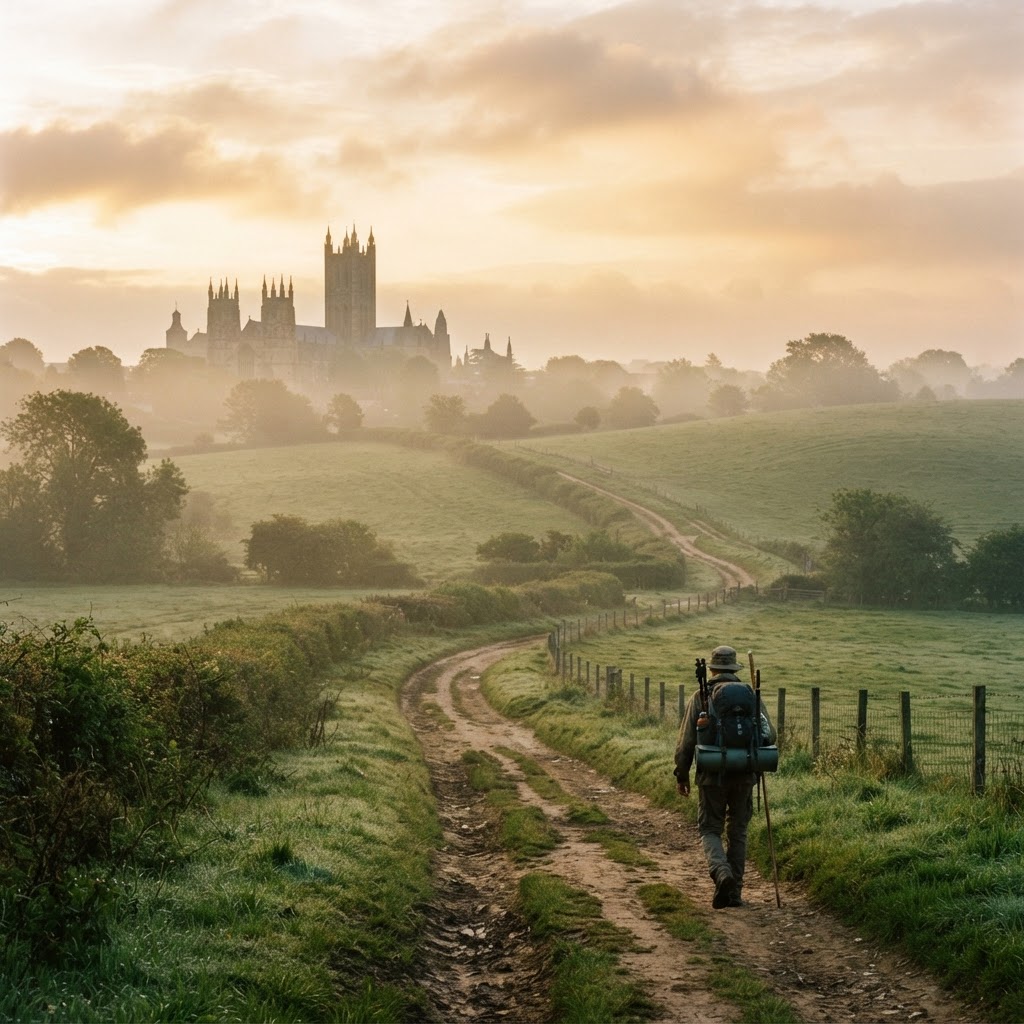
The Via Francigena in Tuscany — Lucca to Radicofani
Tuscany is the scenic heart of the Via Francigena — about 13 stages and 400 km from the Apennine crossing at Berceto, through Lucca, San Gimignano, Siena and the Orcia valley to Radicofani. Rolling hills, cypress avenues, heat and the most photographed walking on the entire route.
The route
Fornovo → Berceto → Pontremoli → Aulla: the Apennine crossing — steep, forested, hot in summer. Berceto sits at 808 m; the descent to Pontremoli and Aulla is one of the route's hardest day-pairs. Many pilgrims split it or take a bus.
Aulla → Lucca: through Sarzana and Massa to Lucca, the elegant walled city — one of the route's great rest-day towns. Walk the ramparts, see the Piazza dell'Anfiteatro, and rest.
Lucca → San Gimignano: the classic Tuscan stretch — Altopascio, San Miniato (a beautiful medieval hill town), Gambassi Terme, and San Gimignano with its famous towers. Book accommodation well ahead in summer.
San Gimignano → Siena → Radicofani: Monteriggioni's walled village, Siena (a rest day essential — the Piazza del Campo, the Duomo, the contrade), then San Quirico d'Orcia, the Val d'Orcia (UNESCO), and the long climb to the fortress town of Radicofani.
Difficulty
Moderate, with two hard stretches (the Berceto Apennine crossing and the Radicofani climb) and a lot of rolling Tuscan hills. The main enemy is heat — July–August days are 32–36°C with little shade on white roads. Start early, carry extra water, and plan a rest day in Lucca or Siena.
Food
Tuscan cuisine is peasant food elevated — ribollita (bread and bean soup), pappardelle al cinghiale (wild boar pasta), bistecca alla fiorentina, pecorino around Pienza, and pici in the Orcia valley. The wine — Chianti, Brunello, Vino Nobile — needs no introduction. Eat the local speciality in each town.
Planning
13 stages; allow 14–16 days with a rest day or two. Book accommodation 1–2 days ahead from June to September — San Gimignano and Siena fill up fast. Use the planner to map Lucca → Radicofani, keep the hard stages shorter, and read the Lazio guide for the final stretch to Rome.
Explore the route
Via Francigena
Plan your Via Francigena
The heart of the route: the Apennine crossing at Berceto, Lucca, San Gimignano, Siena and the Orcia valley — Tuscany's iconic stages.