Via Francigena Difficulty & Fitness Guide
How hard is the Via Francigena? The honest answer: moderately hard overall, with two genuinely tough stretches — the Great St Bernard Pass and the Apennines — and a lot of long, flat, deceptively tiring days on the Po Valley. With the right preparation, a reasonably fit walker finishes injury-free.
Overall difficulty
- Distance: ~2,000 km, typically walked at 20–25 km/day over 90–100 days.
- Terrain: a real mix — chalk paths, vineyard tracks, canal towpaths, Alpine trails, the Via Emilia's hot tarmac, Tuscan white roads, and ancient Roman approaches into Rome.
- Waymarking: thinner than the Camino de Santiago. You need a map or app — you cannot rely on arrows alone (see Navigation).
- Services: uneven. Some long stages have few water or food stops; parts of southern Lazio are remote.
The hard stretches
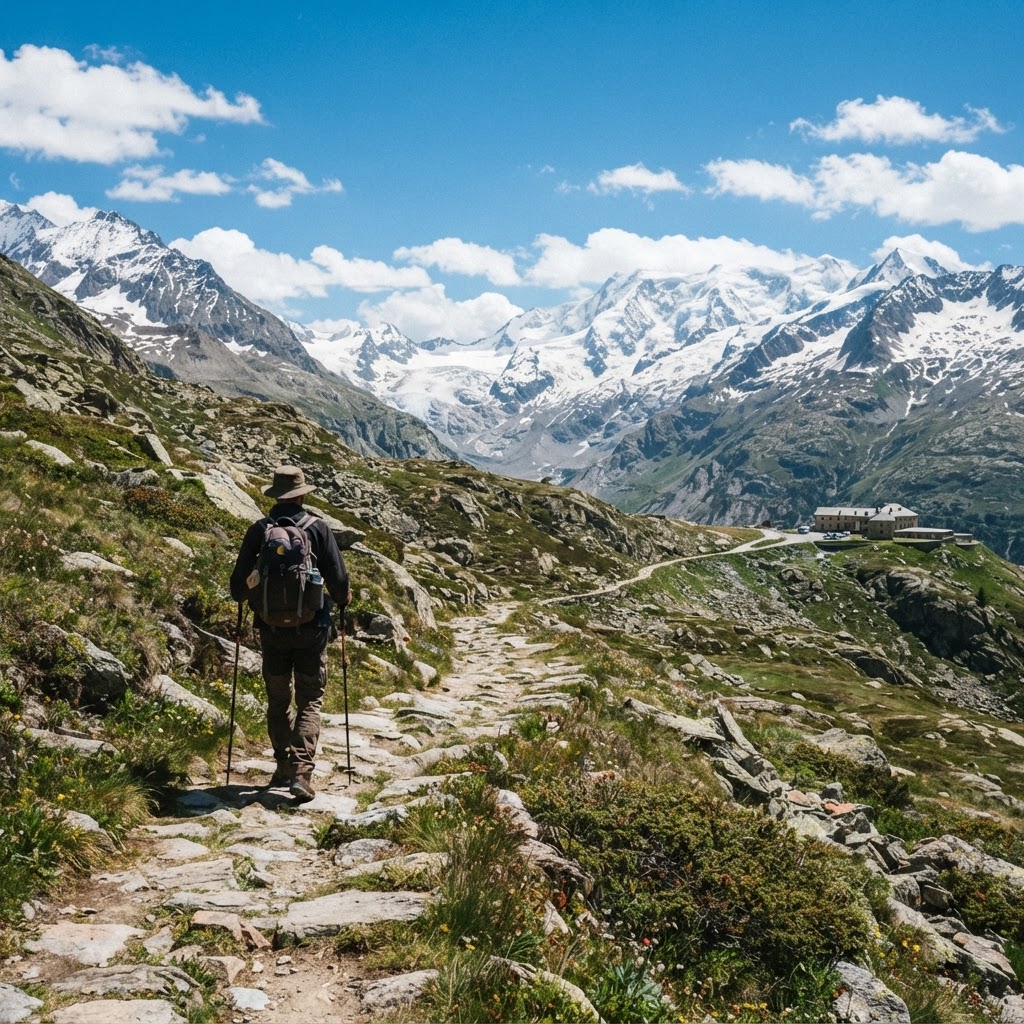
The Great St Bernard Pass (Martigny → Aosta): the route's high point at ~2,469 m. It's a long climb and a long descent, often snow on the ground until June, and the pass road is closed in winter — you'll use the tunnel or a bus transfer. Only attempt it June–September, and check the forecast.
The Apennines (Berceto → Pontremoli → Aulla): the crossing into Tuscany. Steep, forested, hot in summer, with big elevation swings. Many pilgrims find it harder than the Alps because the heat compounds the climbs.
The Po Valley (Vercelli → Parma): flat but long, straight and exposed. The difficulty is psychological — 30 km on a straight road in August heat drains you. Start early and carry extra water.
Fitness level you need
You need moderate walking fitness, not athletic conditioning. The benchmark: before you leave, you should be able to walk 20 km on two consecutive days with your loaded pack and feel tired but not broken.
If you can't train much, start slow — 15 km/day for the first 3–4 days — and build. Most injuries happen in week one from overenthusiasm, not from lack of fitness. See the Training Guide for a 4-week plan.
Keys to finishing
- Walk your own pace. Trying to keep up with a faster pilgrim is the #1 cause of injury.
- Take a rest day every 7–10 days. Pilgrims who never rest are the ones who stop early.
- Tape hot spots instantly. A 30-second fix saves a week off (see Blister Prevention).
- Respect the Alps and the Apennines. If the forecast is bad, wait a day or take transport.
The Via Francigena rewards patience and punishes ego. Prepare your body, walk within it, and you'll reach Rome.
Explore the Via Francigena
Via Francigena
Plan your Via Francigena
How hard is the Via Francigena? Terrain, daily distance, the Alpine stages and Apennines, and the fitness level you need to finish injury-free.