History of the Via Francigena — From Sigeric to the Modern Revival
The Via Francigena is one of the oldest long-distance pilgrimage routes in Europe — older in its origins than the Camino de Santiago. For over a thousand years, pilgrims, bishops, merchants and armies have walked the "road that comes from France" from Canterbury to Rome. Here is its story.
Origins
The route's roots are Roman — it follows, in stretches, the network of roads the Romans built from the Channel to Rome via the Great St Bernard Pass. The name "Francigena" ("the road that comes from France") reflects the medieval reality that the route passed through Frankish (French) territory on the way south. By the 8th and 9th centuries, it was the principal overland route between northern Europe and Rome.
Sigeric's journey (990 AD)
The route's defining document dates to 990 AD, when Archbishop Sigeric the Serious of Canterbury walked to Rome to receive his pallium — the woollen band of office — from the Pope. On his return, he recorded the 79 stages of his journey back to Canterbury. That list of stage-towns, preserved in the Canterbury archives, became the blueprint for the modern Via Francigena. (See the Sigeric guide.)
The medieval heyday
From the 10th to the 14th centuries, the Via Francigena carried thousands of pilgrims a year to Rome — to the tombs of Saints Peter and Paul, to papal blessings, and to the spiritual benefits of pilgrimage itself. It also carried merchants (the Champagne fairs grew along its path), diplomats, and the occasional army. The Great St Bernard Hospice, founded in the 11th century, was built specifically to shelter pilgrims crossing the Alps — and it still operates today.
Decline
The route's decline came in the 14th and 15th centuries with the Black Death, the Avignon papacy (the popes left Rome for France), the Hundred Years' War across the route's French section, and the rise of sea travel. The Reformation further reduced pilgrim numbers from England. By the 17th–18th centuries, the Via Francigena was a shadow of its medieval self — the waymarks faded and many hostels closed.
The modern revival
The revival began in the 1980s and 1990s, led by Italian regions (Tuscany first), the European Association of the Via Francigena (AEVF), and national confraternities. The route was declared a European Cultural Route by the Council of Europe in 1994. Since then, waymarking has steadily improved, accommodation has reopened, and pilgrim numbers have grown — though the route remains far quieter than the Camino de Santiago, with perhaps 3,000–5,000 long-distance walkers a year today.
The route today
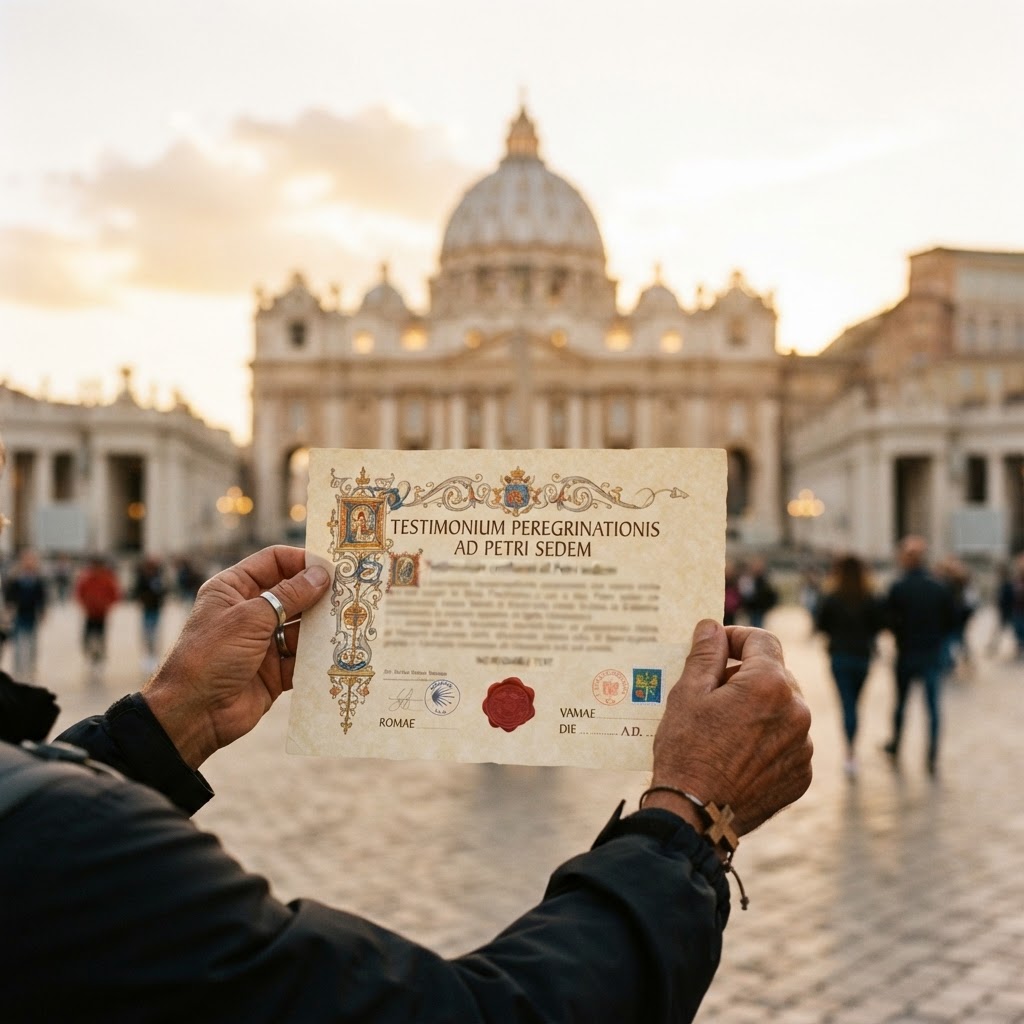
The modern Via Francigena follows Sigeric's stages as closely as modern paths allow — about 2,000 km from Canterbury to Rome, with red-and-white waymarks, a growing network of pilgrim hostels, and the Testimonium (the certificate of arrival) issued in Rome to pilgrims who walk the final 100 km. It is a living piece of European history — walked by a new generation of pilgrims.
Walk the route and you walk in the footsteps of a thousand years of travellers. Use the planner to map your own stages from Canterbury to Rome.
Explore the route
Via Francigena
Plan your Via Francigena
A thousand years of the Via Francigena: Archbishop Sigeric's 990 AD journey to Rome, medieval pilgrimage, decline and the modern revival of the route.