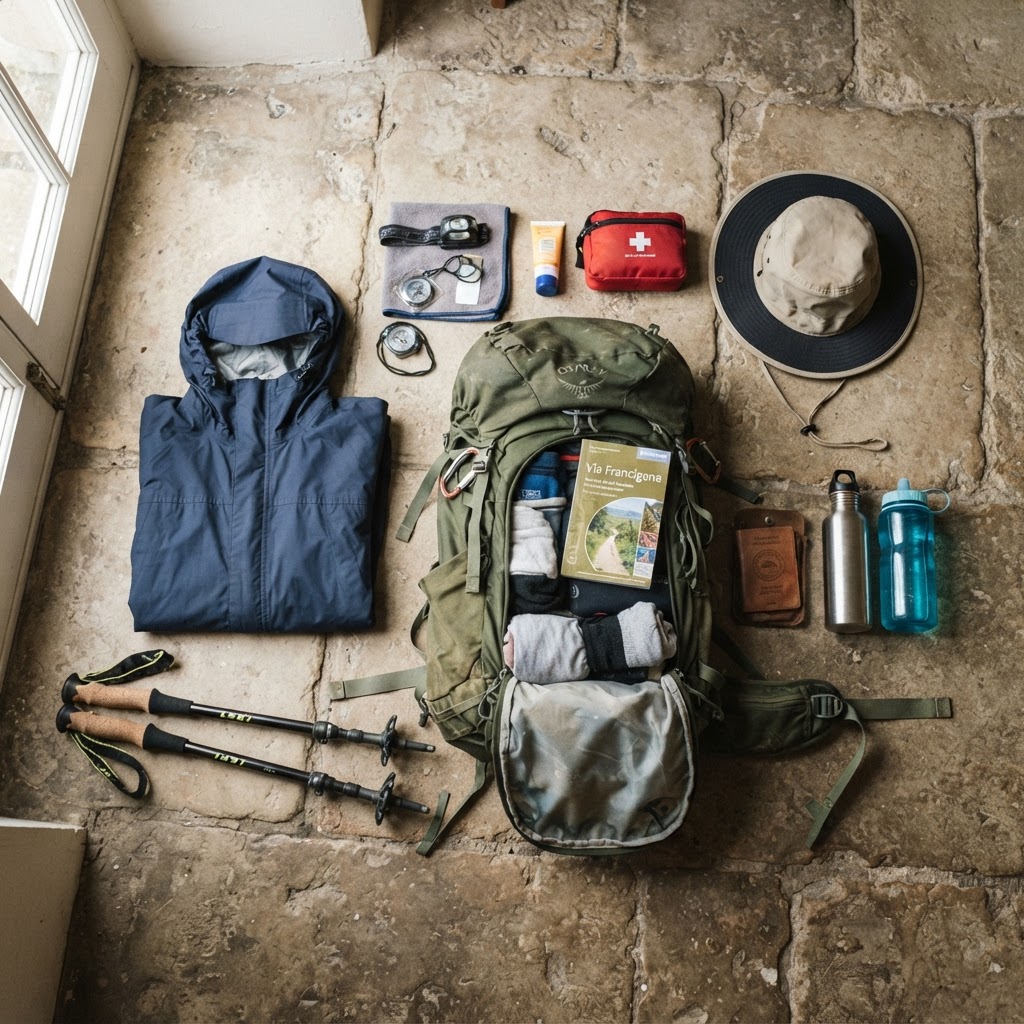
Via Francigena Safety & Insurance Guide
The Via Francigena is very safe — it crosses four of the safest countries in the world, on well-trodden paths through towns and countryside. But 2,000 km of walking carries real, ordinary risks: petty crime in cities, heat illness, blisters, and the Alpine stages. Here is how to manage them.
Crime and theft
Violent crime is rare along the route. The main risk is petty theft in big cities — Paris (if you pass through), Milan, and Rome in particular:
- Use hostel lockers; if none, keep valuables in your pack under your pillow at night.
- Don't leave your phone charging unattended in a dorm.
- In crowds (train stations, tourist squares), keep your daypack in front and zips closed.
- Carry only the cash you need for the day; leave the rest and your cards in the locker.
In small towns and on the trail, theft is virtually unknown. The bigger risk is losing something yourself — label your phone and pack.
Health and insurance
- EU/UK residents: carry an EHIC or GHIC card for free or reduced-cost state healthcare in France, Switzerland and Italy.
- Non-EU residents: buy travel insurance with health cover — a clinic visit in Italy can cost €50–80 without it, and a hospital stay far more.
- Emergency number: 112 works in all four countries, in any language, from any phone, even without a SIM.
- Carry a small first-aid kit and any personal medication; pharmacies are common in towns.
Walking hazards
- The Great St Bernard Pass: only open June–September; check the forecast and carry warm/waterproof layers. See the pass guide.
- Heat: the Po Valley and Tuscany in July–August can hit 32–36°C. Start early, carry 2 L of water, and take a midday break in the shade. Heatstroke is a real risk.
- Traffic: some stages are on or near roads. Walk facing traffic where there's no path, and wear something reflective at dusk.
- Ticks: in woodland stages (France, the Apennines), check yourself each evening and use repellent.
Solo walking
The Via Francigena is safe to walk alone — see the solo guide. The basics: tell someone your daily plan, carry a power bank and offline maps, and use hostel lockers in cities.
Weather and seasons
Spring (May–June) and early autumn (September–October) are the safest windows — mild weather, open accommodation, and no snow on the pass. Winter walking is only for the experienced; the pass closes and many hostels shut. See the season guide.
The bottom line
Carry your EHIC/insurance, keep valuables secure in cities, respect the Alpine weather, and you'll have a safer walk than a week of city life. Use the planner to plan stages that avoid the worst heat and the closed pass, and walk the route the way thousands have before you.
Explore the Via Francigena
Via Francigena
Plan your Via Francigena
Is the Via Francigena safe? Crime, solo walking, the 112 number across four countries, EHIC/travel insurance and common-sense precautions.