Via Francigena Stages — The Full 65-Stage Breakdown
The modern Via Francigena runs roughly 2,000–2,065 km from Canterbury to Rome, conventionally divided into about 65 walking stages of 20–30 km each. Here is the breakdown by country, with the key overnight towns and what to expect.
England (Canterbury → Dover)
2 stages, ~120 km. Canterbury Cathedral, the North Downs, the White Cliffs and the ferry at Dover to Calais. Gentle walking; the logistics (ferry timing) matter more than the terrain.
France (Calais → Swiss border)
~22 stages, ~870 km. The longest national section and the most varied: the flat Pas-de-Calais farmland, Arras and the Somme, the hilltop citadel of Laon, Reims and its coronation cathedral, the Champagne vineyards around Bar-sur-Aube, the fortified town of Langres, and the Jura climb toward Pontarlier. Mostly rolling farmland and canal paths; the final climb into the Jura is the first real elevation.
Switzerland (Sainte-Croix → Great St Bernard)
~7 stages, ~160 km. Yverdon, Lausanne on Lake Geneva, the Lavaux vineyards (UNESCO), Martigny, and the long climb to Bourg-Saint-Pierre and the Great St Bernard Pass. The route's highest and most dramatic stages; the pass is only open roughly June–September.
Italy — Aosta Valley (Aosta → Ivrea)
~3 stages, ~80 km. Aosta's Roman ruins, Pont-Saint-Martin's Roman bridge, and the descent into Ivrea. A welcome downhill after the pass.
Italy — Po Valley (Vercelli → Parma)
~8 stages, ~210 km. The flat rice plains of Vercelli, Pavia and the Certosa, Piacenza, Fidenza and Parma. Long, straight, hot in summer, on or near the ancient Via Emilia. Easy walking but demanding in heat — start early.
Italy — Apennines & Tuscany (Fornovo → Radicofani)
~13 stages, ~400 km. The Apennine crossing at Berceto, the Lunigiana, Lucca, San Miniato, San Gimignano, Siena, San Quirico d'Orcia and Radicofani. The scenic heart of the route — rolling Tuscan hills, heat, and the most photographed stages.
Italy — Lazio (Acquapendente → Rome)
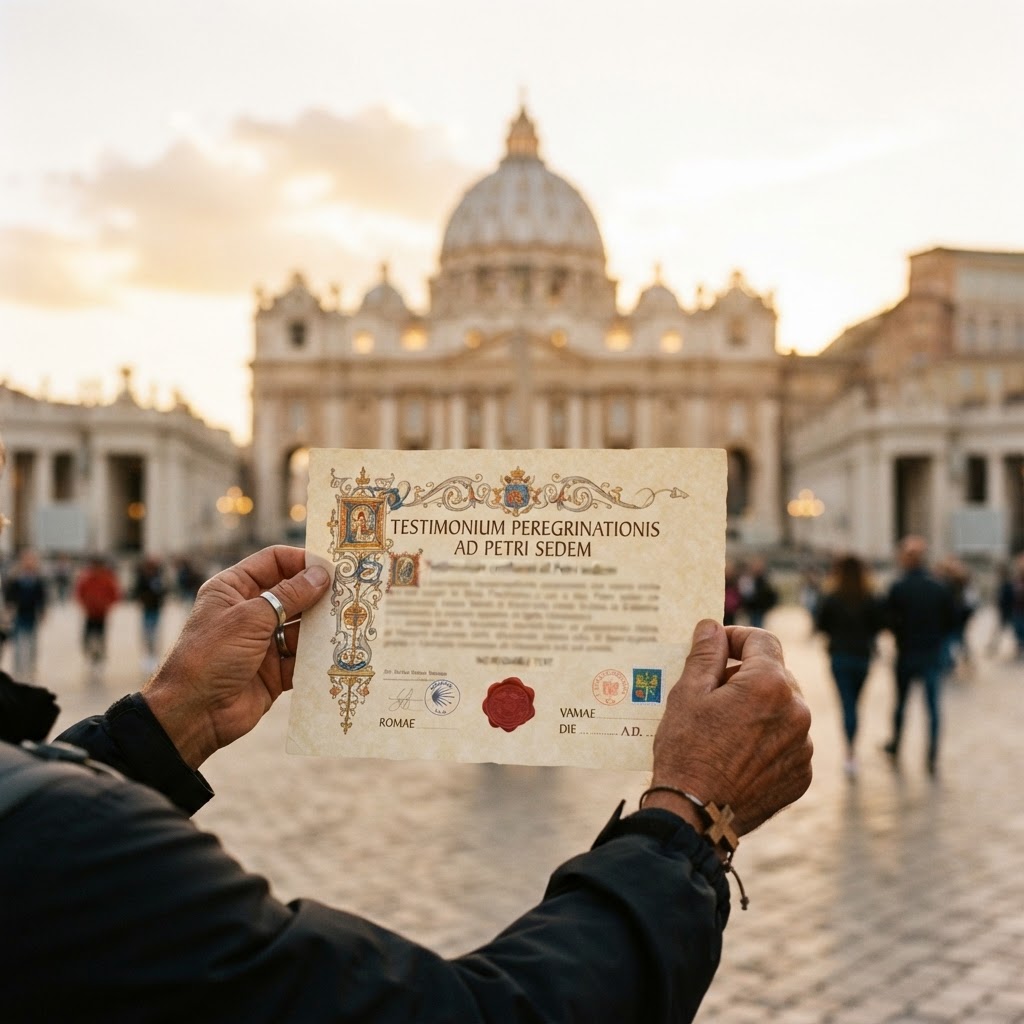
~10 stages, ~220 km. Bolsena, Montefiascone, Viterbo, Vetralla, Sutri, Campagnano, Formello, Isola Farnese and into Rome. The final stretch, quieter and greener, ending at St Peter's and the Testimonium.
How to use the stages
Most pilgrims walk 20–25 km/day with a rest day every 7–10. The hardest stages (Great St Bernard, Berceto, Radicofani) can be shortened by starting earlier or using a bus. Use the planner to set your daily distance and let it lay out the overnight towns — then adjust the hard stages down.
For the full country-by-country detail, see the section guides: England, France, Switzerland, Aosta Valley, Po Valley, Tuscany and Lazio.
Explore the route
Via Francigena
Plan your Via Francigena
The complete stage-by-stage breakdown of the Via Francigena from Canterbury to Rome: distances, elevations, surfaces and the key overnight towns.